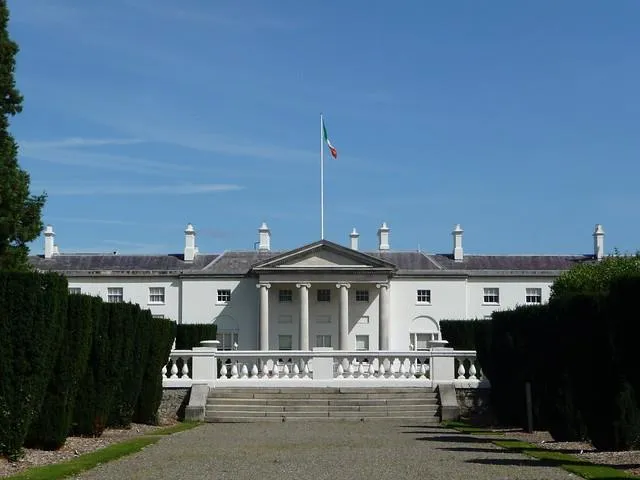
The Presidential 'Race'
The upcoming presidential election promises to be a more novel affair than the local and general elections of 2024. Many people view the presidency as a figurehead of little importance, and unfortunately, that's what it has become. The Áras has also become something of a retirement home for politicians and public figures. By design, the current process limits voter choice to a pre-vetted slate of candidates, often from the political establishment, reducing the election to a contest among insiders rather than a true reflection of public will.
The prospect of a young candidate (well, young-ish—see qualifying criteria below) amid Ireland's housing crisis, which hits those in their 20s and 30s hardest (the "generation locked out"), might seem appealing. However, the reality of a young person getting on the ticket is very slim.
The root of this slim chance lies in the nomination process itself, which operates like something of a closed club, and that's a real shame. Party gatekeeping will effectively stifle rivals in this presidential race. This partisan directive highlights deep-seated flaws in Ireland's presidential nomination process, which disproportionately favours established political parties and erects formidable barriers for independents.
Taoiseach Simon Harris has directed Fine Gael councillors across the country to actively block the nominations of independent candidates seeking to run in the upcoming presidential election. This instruction, issued through the party's general secretary, mandates that Fine Gael's 246 councillors support only the party's chosen candidate, former minister Heather Humphreys, and oppose any other nominations at local authority meetings. It's likely other parties will adopt a similar policy.
To understand the inherent unfairness, let's examine how candidates qualify for the ballot. Under Ireland's constitutional framework, a presidential hopeful must be an Irish citizen aged 35 or older and secure nomination through one of three routes:
the backing of at least 20 members of the Oireachtas (parliament),
the support of at least four local authorities (county or city councils),
or self-nomination if they are a former or incumbent president.
The last option is not applicable this year. The deadline for nominations in the 2025 election is noon on September 24, leaving aspiring candidates with a narrow window to rally support ahead of an October 24th Election.
These rigid requirements, combined with party dominance, cry out for reform as the Oireachtas and local authorities are dominated by Fine Gael, Fianna Fáil and Sinn Féin,. It would be quite the achievement for any candidate to get a nomination outside the party tickets, as parties can whip their members and councillors to promote only their chosen candidates.
The larger parties have significant influence on who appears on the ballot (as expected, given their electoral success). This means independents and smaller parties need to be very coordinated to diversify nominations. That's why it would be a remarkable achievement for someone like Nick Delehanty, a young activist with a large online following, or Gareth Sheridan, an Irish pharma entrepreneur, to make the ballot. Catherine Connolly, an Independent TD from Galway West, is likely to secure the support of 20 Government members from her former party Labour as well as from the Social Democrats and PBP.
The process has been called anti-democratic by some. While party control stems from their democratic success in general and local elections, not everyone appreciates this, and I think the public would like to see more options on their ballot. Nor is it an exclusively modern problem, historically, it has been a short ballot. On six occasions, there has been no election because only one candidate made it through the process. So while this gatekeeping is not a new phenomenon, it has been amplified in the current cycle.
Mathematically speaking, there is the potential for 18 candidates to make the ballot paper under current rules. There are 234 Oireachtas members; a nominee needs 20, so if each grouped to nominate a unique candidate, that would allow for 11 candidates. There are 31 local authorities, with a candidate needing 4 councils to approve them; if councils agreed to promote the maximum number, this would allow for 7 more names on the ballot.
To realise this hypothetical potential, councillors, TDs, and senators would need to put democratic principles ahead of party loyalty. This almost certainly won't happen—not even close—and the ballot paper will be deliberately short and limited, as most candidates will be squeezed out. This makes the role very niche and limited, so it's no surprise the public finds it a hard election to get excited about.
That’s why, surely some sort of reform is needed to give the vote, and the role a bit more…relevance? In a democracy, the presidency should represent the broadest possible spectrum of Irish society, yet the nomination hurdles ensure that only those aligned with major parties—or exceptionally well-resourced independents—stand a realistic chance.
I'd be all for allowing easier entry to the ballot, perhaps by enforcing unique nominations and using a PR system for Oireachtas members (nominations pass to another candidate once one has 20 supporters). Maybe allowing councils to nominate multiple candidates via multiple in-county votes, or direct nomination once a certain number of councillors agree, would be a positive move. It would certainly allow for different groupings and faces to get on the ballot, giving a greater chance to smaller parties too.
Given that the spirit of local governance is that councillors are meant to represent their constituents’’ needs: It is unfair, but convenient, that some councillors are being instructed by their party leaders to vote a certain way. It removes the burden of decision-making from them and avoids a conflict between local interests and party instructions.
I've spoken before about how councils' powers have been eroded. This is another example. Councils now have a superficial vote in the presidential campaign that amounts to very little relevance. This centralization of power raises questions about accountability: Why should local bodies, funded by taxpayers, be weaponized to protect party interests? The result is a narrowed field, potentially depriving voters of debates on critical issues like healthcare, migration, housing, and inflation from non-traditional perspectives.
Beyond structural and political hurdles, there's also the practical barrier of money. The presidential campaign requires traveling the length and breadth of the country. People in the know have told me you'd be looking at a half-million-euro campaign (there is a spending cap of €750,000). Meaningful reform would also need to consider ways of including those who don't have that kind of cash to risk on a gamble.
This year already, we've had a number of candidates announce and then renounce their intention to run after every national and regional paper did pieces on them and a few hard questions were asked on live television. My own experience of politics was daunting enough entering as a councillor, so I do believe if someone wants to put their head on that block—I say fair play to them. Let the public decide!
Until changes are implemented, Ireland's presidential election will remain an uneven contest, where the real power lies not with the people, but with party leaders who can dictate the terms of entry. In an era of growing disillusionment with politics, this unfair process risks further alienating citizens from their democracy.
