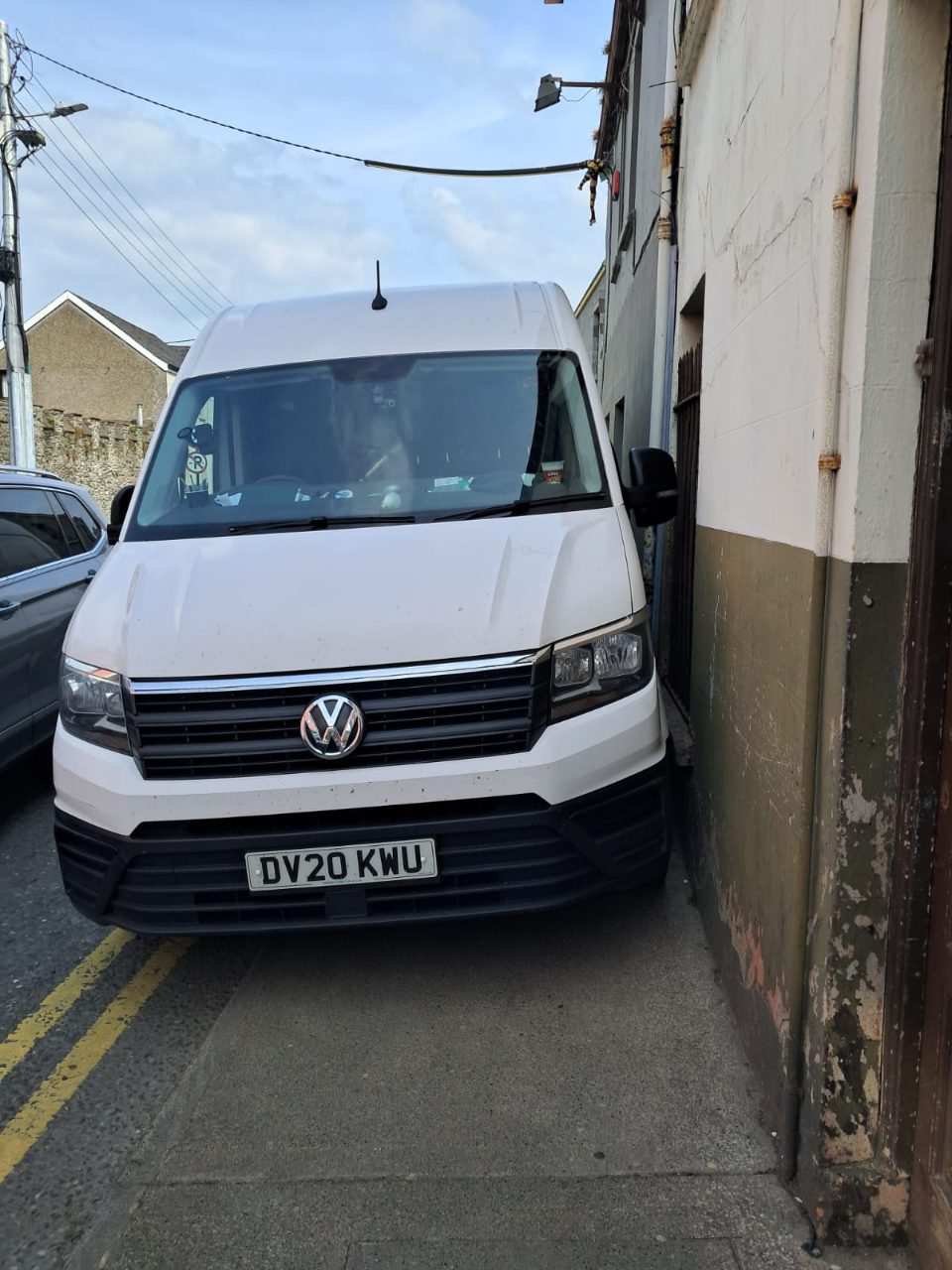
Better Parking Enforcement Needed
'We painted the yellow lines. We should enforce them.'
Rogue parking is spreading because the risk-to-reward ratio favours the person breaking the rules.
You do not have to walk far in Dundalk to see it. Cars half up on the footpath. Vehicles sitting on double yellow lines as if the paint were decoration. Spaces meant for disabled drivers used as a handy five-minute stop. Loading bays treated as ordinary parking. The more you notice it, the more you notice it — and it is getting worse.
Last October I asked Louth County Council to review the pay parking zones in the Dundalk Municipal District. That motion was about more than meters and rates. It was about expanding the managed area where it makes sense, easing the squeeze on streets just outside the current zone, and putting some order on a system that has grown patchy. The Council agreed to a full review. That work still matters. Revenue from a properly designed scheme is useful. Standardised, street-by-street management is more useful again. But a review of where we charge for parking will not, on its own, stop a car blocking a buggy on a path in Seatown, outside St Nicholas’, along Williamson’s Lane, at Pearse Park, or beside Dundalk Grammar School.
Inside the pay parking area, there is at least a system. Wardens work the core. Machines, apps and bye-laws give the rules a shape. Outside that line, too many motorists have decided they can take the risk. The calculation is simple. If you are unlikely to get a ticket, why not park on the path? Why not sit on the yellow lines the Council itself put down?
That is not a small civic irritation. It pushes wheelchair users, parents with prams and older people into the carriageway. It clogs streets that were never designed as overflow car parks. It undermines money already spent on public realm — Church Street and Bridge Street being the obvious examples. And it sends a message that the rules apply only where there is a meter.
I understand the manpower argument. Traffic wardens are spread thin. Their working day is built around the pay parking hours — 8.30am to 5.30pm, Monday to Saturday. Their focus, unsurprisingly, is the zone that generates the tickets and the revenue. When this has been raised, the reply is often that if an offence is reported they will make an effort. Reporting helps. It should not be the whole policy. A yellow line is not a suggestion that becomes real only after a resident sends an email.
As a Council we still have a responsibility to keep paths clear and to police the restrictions we chose to paint. That duty does not stop at the edge of the pay zone. It does not expire because a street has no ticket machine.
After half five, the gap gets wider
Outside those hours the job falls to An Garda Síochána. Roads Policing have shown they can act — tickets on Bridge Street earlier this year were welcome, and more of that would help. But Gardaí are not a parking service. They are stretched across far more serious work. Asking them to be the evening and weekend answer to footpath parking across Dundalk is not a plan. It is a default.
There is a conflict here, and it is better to name it than dance around it. We do not have a huge pool of staff. There is a reluctance to put wardens into streets that sit outside pay parking. I get why that happens. Resources follow the scheme that pays for itself. The result, though, is a town that looks regulated in the centre and optional everywhere else. People notice. They adjust their behaviour. The free-for-all spreads.
We need to be more proactive, not more hopeful.
First, recruit more wardens and widen their remit so that yellow lines, footpaths, disabled bays and loading bays are enforced across the town during the working day — not only where a motorist is expected to feed a meter. The review of pay parking should sit beside that, not instead of it. Extending managed zones can reduce pressure on the fringes. It does not replace the basic job of keeping a path walkable.
Second, we should look seriously at private contractors to extend coverage and to take the burden off Gardaí after 5.30pm. Clamping and parking operations are already delivered with contracted support in many Irish towns. There is no good reason Dundalk should treat evenings, weekends and the streets just beyond the pay zone as a no-go area for civil enforcement. If the Council will not staff those hours itself, it should buy in the capacity. Gardaí should be left for the cases that are dangerous, obstructive or persistent — not for every car sitting on a yellow line at six o’clock.
None of this is anti-driver. Workers need somewhere to park. That is why the review I sought asked for proper thought on employee parking, on streets like Seatown, on tiered rates further from the core, and on not punishing residential streets for a town-centre problem. Fair parking and enforced parking are the same project. If the only choice is “pay in the centre or take your chances on the path,” too many people will take their chances.
Report it — and expect more than a shrug
If you see a car blocking a footpath or sitting on double yellows, report it. Names and photos help. I will keep raising the specific streets that residents send me. But residents should not have to police the town in their spare time because the official net is drawn too tight.
Yellow lines are not street art. Footpaths are not overflow bays. We painted the restrictions. We have a duty to stand over them — in the pay zone, outside it, and after the wardens go home.
If a particular stretch of path or a set of yellow lines is being abused on your street, get in touch via ciaranfisher.ie and I will keep pushing it at Municipal District level.
Ciarán
