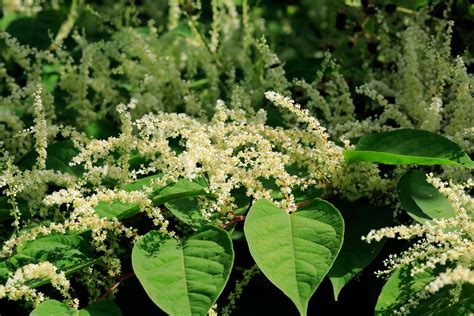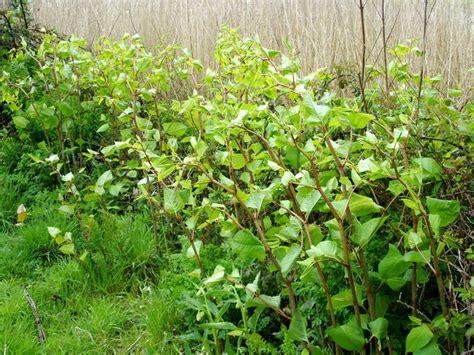
Tied up in Japanese Knotweed
Japanese Knotweed: Who Do You Call? Right Now, Nobody Who Can Help
'Reporting knotweed should start something, not end in a form.'
If you've come across Japanese knotweed on your property, or next door, you'll know the worry that comes with it. It's one of the most aggressive invasive plants in the country. It pushes through paving and patios, crowds out native plants and spreads along rivers, roadsides and gardens. It is difficult and expensive to get rid of properly, and treatment usually takes several seasons. Sorting it out can cost a homeowner a lot of money.
Over the last year I've had several reports about knotweed, and I've spotted it at a few locations around Dundalk myself. Each time, I've run into the same problem: there's nowhere clear to send it.
Reporting it to the Council
Louth County Council has a way to report invasive species on its website, so people reasonably assume that reporting it means something will happen. In practice the report is acknowledged and that's where it stops. No letter goes to the homeowner or landowner to tell them knotweed is on their land. The Council has also made clear it does not treat knotweed.
When I raised this, I was told it is "outside of Council responsibilities" to write to the owner and that the National Parks and Wildlife Service (NPWS) is the lead agency on invasive species. The NPWS, for its part, controls invasive species in National Parks and Nature Reserves but has no general role in treating privately owned land. The Department of Housing says plainly that responsibility rests with the landowner.
The Department and NPWS advise the public to log sightings with the National Biodiversity Data Centre at invasives.ie. That's useful for mapping where knotweed is, but the Data Centre's own guidance says it does not notify landowners or carry out enforcement.
So a resident can report knotweed to the Council, to the Data Centre, or to me through TownPin, and the owner of the land may never hear about it or get any advice on what to do next.
There's money, but none of it reaches homeowners
The Department confirmed in September that there is no dedicated national grant scheme for private landowners to assess, treat or monitor Japanese knotweed. The NPWS public information note on knotweed, issued in 2020, said there were no plans to provide grant funding to homeowners. Six years on, nothing has changed.
There is funding for local authorities. More than €400,000 has been awarded through the NPWS Local Biodiversity Action Fund over the past four years for knotweed projects. A Dáil reply in July 2026 listed the funded projects with a knotweed element from 2023 to 2026, in Clare, Cork, Dublin, Kerry, Offaly, Roscommon, Westmeath and elsewhere. Louth isn't on that list.
The Department says the new national Nature Restoration Plan may include future measures to support public and private landowners, possibly including action on invasive species. "May" isn't much help to a family looking at a knotweed bill this autumn.
The law expects owners to act, then makes it hard to
The rules here are strict, and rightly so. It's an offence to allow knotweed to spread, and official guidance says that if it's on your land, doing nothing could count as exactly that. You can't simply dig it out and skip it either. Removing it needs a licence from the NPWS with a management plan, the waste has to go to a specialist landfill, and since 2024 soil from infested ground is regulated material in its own right. Restrictions on herbicide use mean most people can't treat it themselves.
So a homeowner is legally expected to deal with it but has to find, and pay for, a specialist to do it properly. As I told the September Municipal District meeting, it's very difficult to find someone who can treat it, and in some cases it's very expensive.
What I'm calling for
First, when someone reports knotweed to the Council, the Council should send an advisory note to the owner explaining what the plant is, what their responsibilities are and where to get proper help. It should also refer the case to the NPWS. That's a simple step and it would make reporting count for something.
Alongside that note, the Council should publish a register of qualified knotweed treatment specialists, so residents aren't left searching for someone they can trust to do the job legally.
Third, there needs to be a clear, agreed process between the Council, the NPWS and the Data Centre. Residents shouldn't have to work out for themselves which of three bodies, if any, will act.
Fourth, there should be a grant scheme for domestic owners. Knotweed doesn't respect boundaries. A homeowner who can't afford to treat it isn't the only one affected, because their neighbours, the road and the river are too. Support should cover treatment and the several years of monitoring that proper eradication takes.
Finally, Louth should be applying for Local Biodiversity Action Fund money to tackle knotweed here, as other counties have done.
Coverage of my comments at the September meeting: www.independent.ie/county/louth/it-is-very-expensive-to-treat-louth-councillor-calls-for-robust-response-to-japanese-knotweed-reports
Report it, and let me know
If you've seen knotweed on your street, by a river or on your own property, log it at invasives.ie and send it to me through TownPin or ciaranfisher.ie as well. I'll keep a record of every location and keep pushing this at Council and with the Department.
Ciarán